Norovirus, rotavirus, and enteric adenovirus can all cause acute gastroenteritis, but the three differ significantly in their primary affected populations, typical disease course, modes of transmission, and diagnostic methods. Norovirus commonly causes sudden-onset vomiting and diarrhea in people of all ages; rotavirus is particularly likely to cause more severe watery diarrhea in infants and young children; while adenovirus may cause gastrointestinal infections or infections in other systems, such as the respiratory tract, depending on the virus type.
Because the clinical symptoms of these three viruses overlap considerably, symptoms alone are often insufficient to accurately determine the specific pathogen. Therefore, when pathogen identification is important for patient management, infection control, or outbreak investigations, antigen testing or molecular testing based on stool samples can provide more valuable diagnostic evidence.
From a practical clinical perspective, the most important differences among the three are the commonly affected populations, symptom patterns, and duration of illness.
| Comparison item | Norovirus | Rotavirus | Enteric adenovirus |
|---|---|---|---|
| Commonly affected populations | All age groups | Mainly infants, young children, and children | Mainly children, but people of all ages may be infected |
| Typical symptoms | Sudden vomiting, diarrhea, nausea, and abdominal pain | Watery diarrhea, vomiting, fever, and abdominal pain | Diarrhea, vomiting, nausea, and abdominal discomfort |
| Typical incubation period | Approximately 12–48 hours after exposure | Approximately 2 days after exposure | Varies depending on the adenovirus type |
| Typical disease course | Usually 1–3 days | Usually 3–8 days | May last longer in some cases |
| Primary concern | Spreads rapidly and can easily cause clustered outbreaks | Higher risk of dehydration in infants and young children | Must be differentiated from other causes of diarrhea |
Norovirus is particularly notable for its strong transmissibility and can spread rapidly through person-to-person contact or contaminated environments. With rotavirus, greater attention should be paid to infants and young children, as persistent watery diarrhea and vomiting may lead to significant dehydration.
Usually not.
Vomiting, diarrhea, abdominal pain, and fever may occur with a variety of gastrointestinal viral infections. Even when certain viruses have relatively typical symptom patterns, clinical manifestations alone are not sufficient to identify the pathogen in every case.
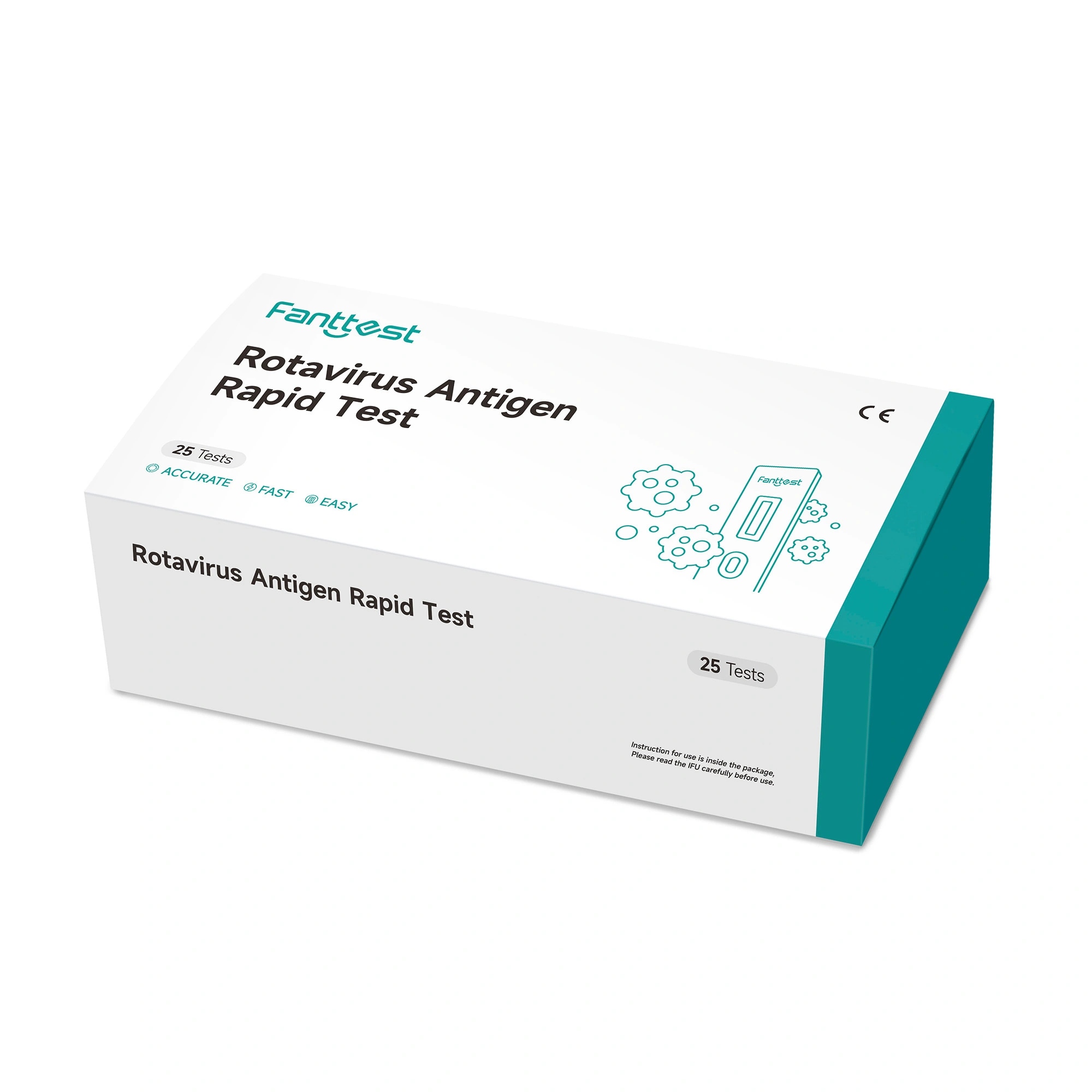
This is why rapid testing has practical value. Norovirus rapid testing (norovirus rapid test), **rotavirus rapid testing (rotavirus rapid test), and adenovirus rapid testing (adenovirus rapid test)** can detect viral antigens in stool samples and provide a faster basis for differentiating common viral gastroenteritis.
When healthcare professionals need to rapidly screen stool samples for suspected viral pathogens, rapid antigen testing can be highly useful.
Rotavirus rapid testing can be used to assist in evaluating pediatric patients with acute watery diarrhea and vomiting. In addition to rapid antigen testing, rotavirus can also be detected by PCR or other immunological methods.
Adenovirus rapid testing can be used to assist in detecting enteric adenovirus antigens in stool samples from patients with gastrointestinal symptoms. Adenovirus infection can also be confirmed through antigen testing, PCR, or other methods.
For norovirus, the testing method should be selected with greater caution. Norovirus rapid testing can serve as a rapid screening method, but in situations such as outbreak investigations, RT-qPCR is generally still the more commonly used laboratory testing method. This is because the sensitivity of some commercial norovirus antigen testing products may be lower than that of molecular testing. Therefore, when clinical symptoms or epidemiological information strongly suggest norovirus infection, a negative rapid test result cannot completely rule out the possibility of infection.
Identifying the pathogen helps support more appropriate infection control and epidemiological investigations, especially when multiple patients in the same institution or setting develop similar gastrointestinal symptoms.
This is particularly important in hospitals, childcare facilities, nursing homes, schools, and other crowded settings, because gastrointestinal viruses can spread rapidly in these environments.
At the same time, testing can reduce the uncertainty associated with relying solely on symptoms, since the clinical manifestations of different viral infections are often very similar. However, all test results should be interpreted comprehensively together with the patient’s medical history, clinical symptoms, sample quality, and local clinical guidelines.
Although norovirus, rotavirus, and adenovirus can all cause similar gastrointestinal symptoms, these infections should not be treated as completely interchangeable.
Norovirus is more common among people of all ages and has a strong ability to spread and cause outbreaks; rotavirus has a more pronounced impact on infants and young children, for whom the risk of dehydration requires particular attention; and enteric adenovirus is also an important viral pathogen that should not be overlooked in childhood gastroenteritis.
When clinical or infection control efforts require identification of the specific pathogen, rapid antigen testing based on stool samples can provide useful supporting information. The appropriate norovirus rapid test, rotavirus rapid test, or adenovirus rapid test should be selected according to the specific clinical situation, and the results should be interpreted as part of the complete diagnostic process.
Norovirus more commonly causes sudden and pronounced vomiting, but rotavirus and adenovirus infections may also be accompanied by vomiting.
It can be. Infants and young children are more likely to become dehydrated due to persistent vomiting and watery diarrhea, so they require particular attention.
Yes. Adults can also become infected with rotavirus, but their symptoms are usually milder than those in infants and young children.
Yes. Certain types of adenovirus can cause acute gastroenteritis, resulting in diarrhea, vomiting, nausea, and abdominal discomfort.
Not necessarily. The sensitivity of some norovirus antigen tests is lower than that of RT-qPCR, so the results should be assessed together with the symptoms and epidemiological circumstances.
Stool samples are among the most common sample types used for gastrointestinal virus antigen testing and molecular testing.